Hours do not certify a level
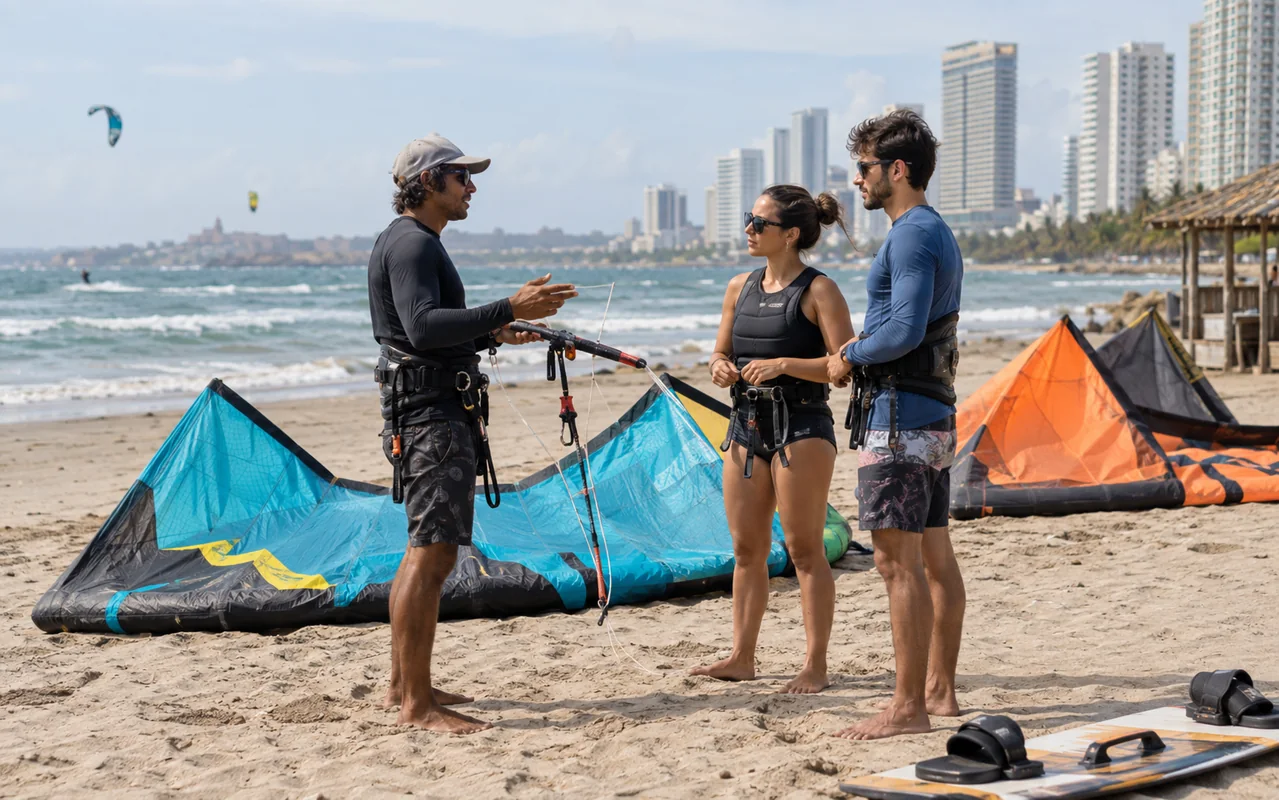
An eight-hour package describes teaching time, not automatic independence. Practice time, continuity, conditions and previous skills differ between students. Compare how a course assesses and records progress as well as its duration. Repeating something once by chance is different from doing it consistently.
Control, body dragging and water starts
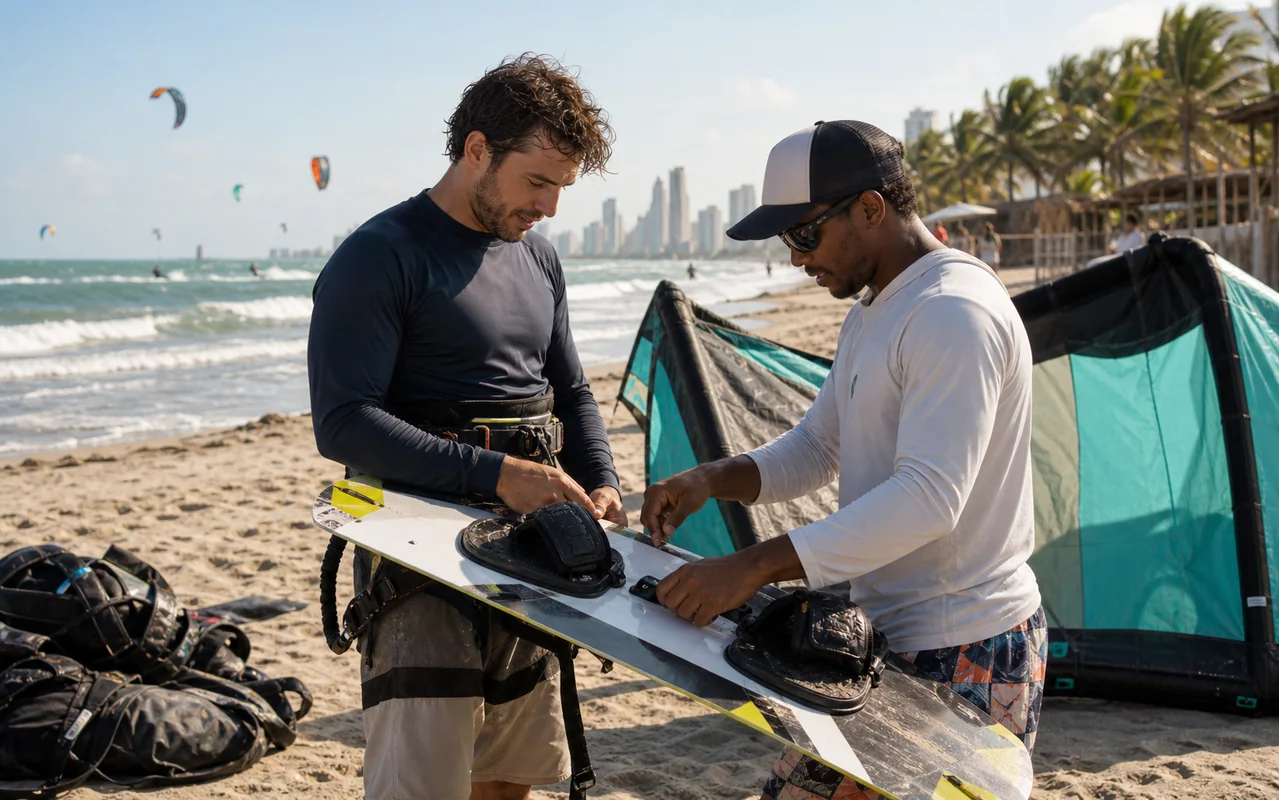
Kite control provides the base for water exercises. Body dragging develops movement and board recovery; a water start adds coordination between kite, body and board. A short ride is a milestone, but stopping, sustained control and direction still matter. Work on one identified difficulty at a time with the instructor.
Riding upwind and returning
Travelling a few metres and returning to the planned exit are different goals. Upwind progress must include controlled speed, stopping and space around others. Do not compensate for persistent drift by going farther offshore. IKO distinguishes discovery, intermediate and independent levels; those stages support discussion rather than guarantee the outcome of a package.
Plan the next useful session
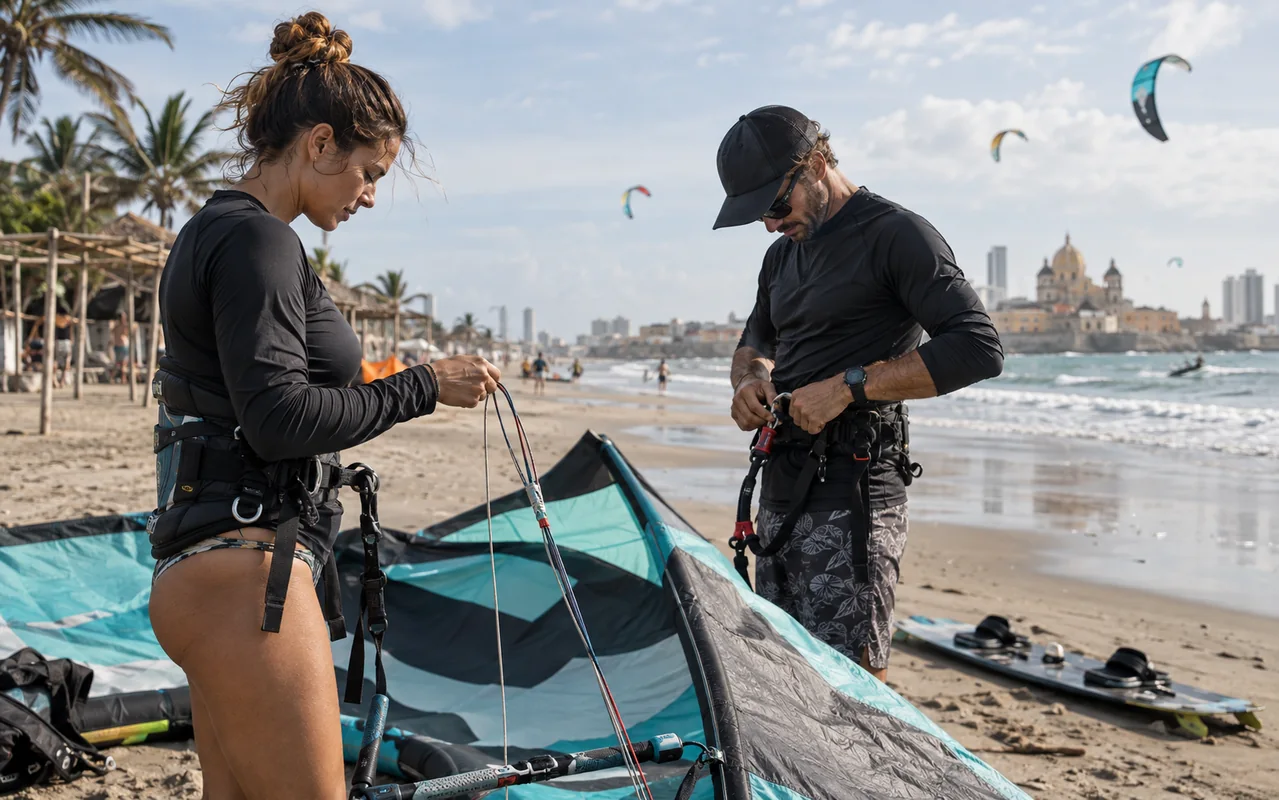
Record the skill practised, help required, main difficulty and next target. After a long break, allow time for reassessment. A focused refresher can be more useful than repeating a course by its name. A rental provider may check your present ability even if you have a previous training record.
Official reference: IKO · Courses and certifications · IKO · Training videos