Control comes before the board
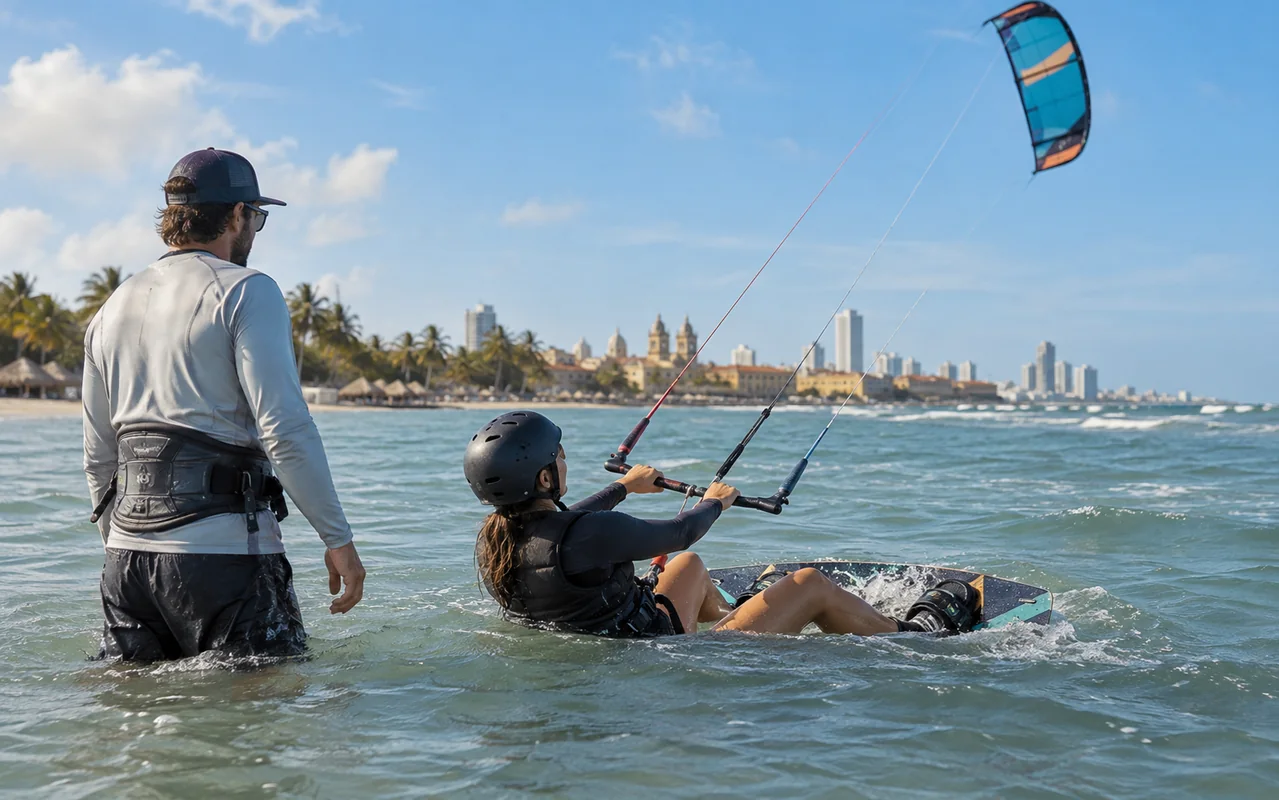
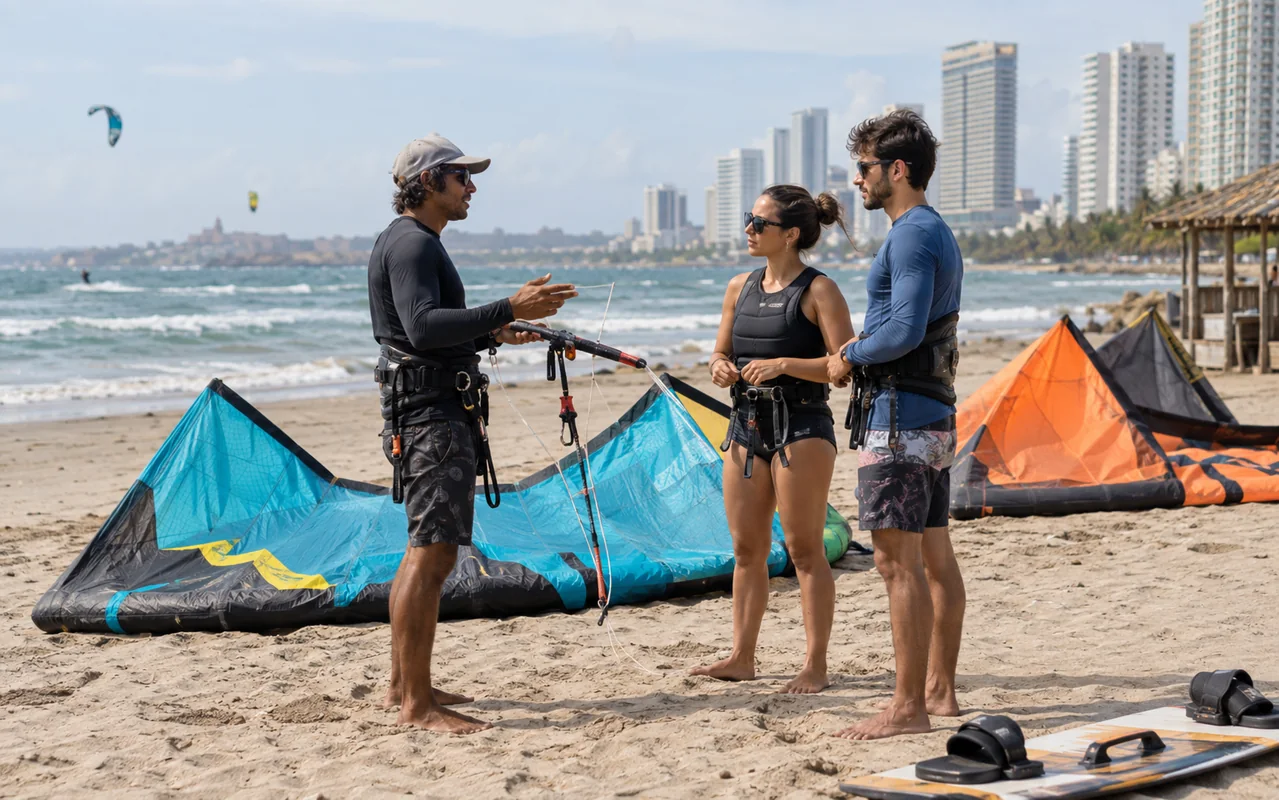
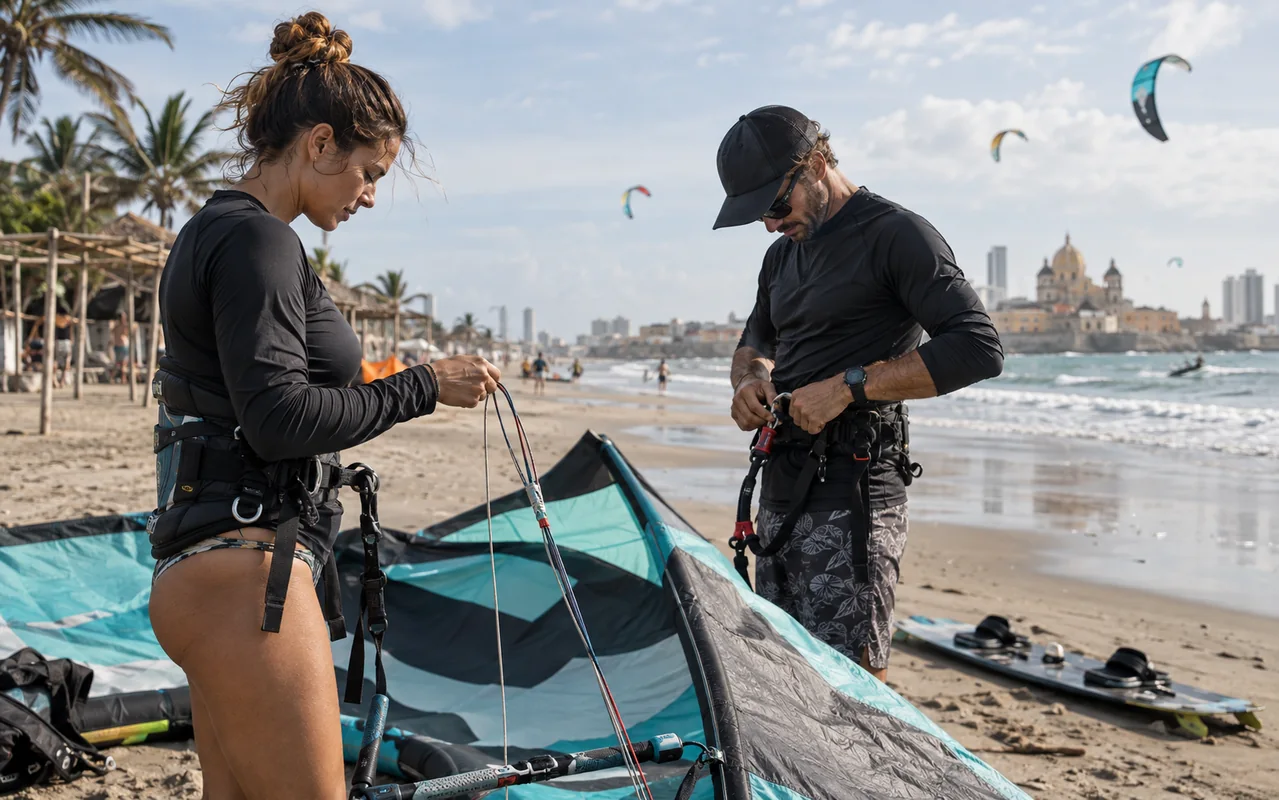
An introductory session should explain the practice area, equipment and communication. Depending on conditions, you may start with land-based orientation and kite control before entering the water. Finishing without riding a board does not mean the lesson failed; the useful question is what you can now repeat reliably.
Describe your starting point
Tell the instructor how comfortable you are swimming in the sea and whether you have board-sport experience. Name specific concerns, such as drifting away or losing control. Agree on a pause signal. A flotation aid does not replace water competence, and admission must fit the proposed activity.
Age and clothing
For children, ask about admission criteria, guardian involvement and suitable equipment; an age alone does not guarantee suitability. Wear secure swimwear and comfortable sun protection under the harness. Remove snagging accessories and store valuables away from rigging. Bring water, a towel and dry clothes; ask about footwear for the actual entry area.
Leave with a learning record
Ask which skills required prompts and which you performed independently. Write down the next goal rather than only the number of paid hours. “What must I demonstrate before moving on?” is a useful question. It makes progress observable and gives another instructor meaningful information if you continue elsewhere.
Official reference: IKO · Courses and certifications · IKO · Training videos