Look beyond the launch area
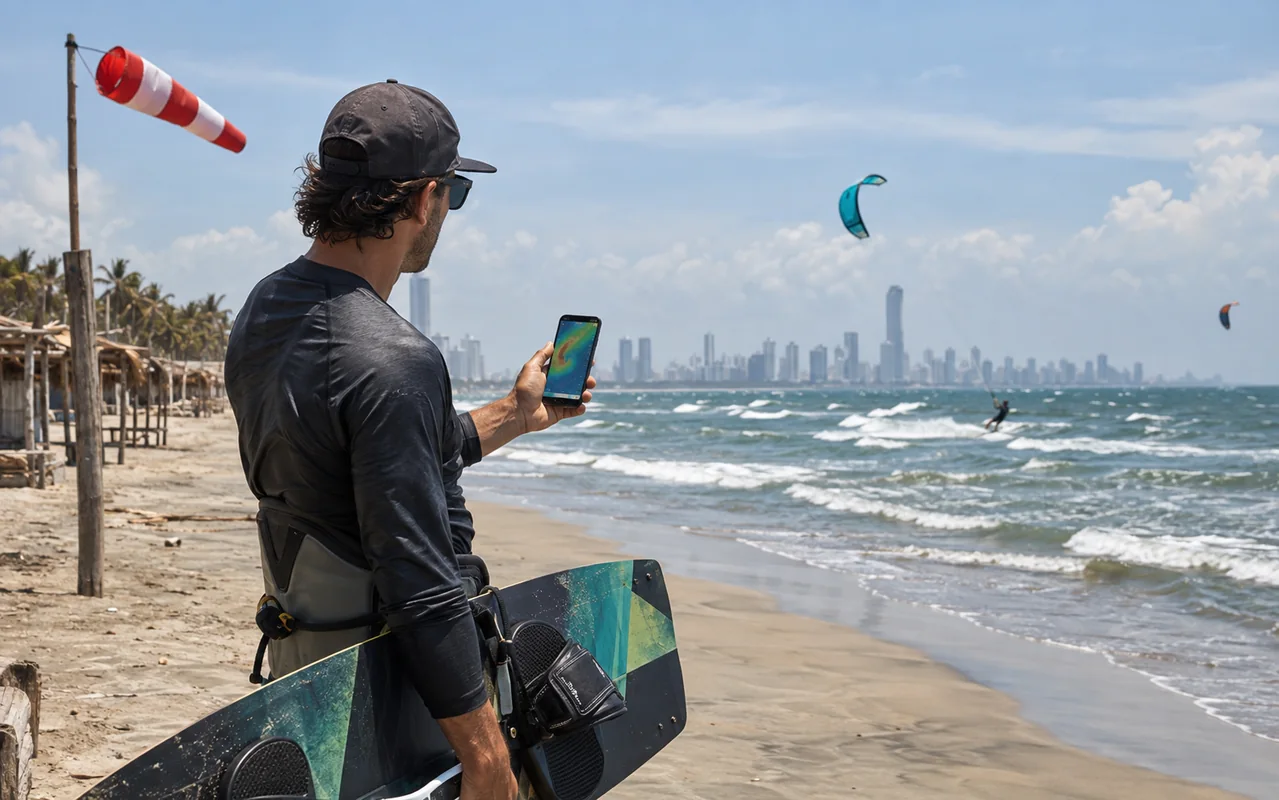
Identify people, obstacles, other lines and possible exits, including where you could drift. A clear launch spot may lead toward a difficult downwind area. Discuss how the wind direction affects the route. If you cannot explain where you would end up after losing forward progress, the assessment is incomplete.
Understand today’s equipment
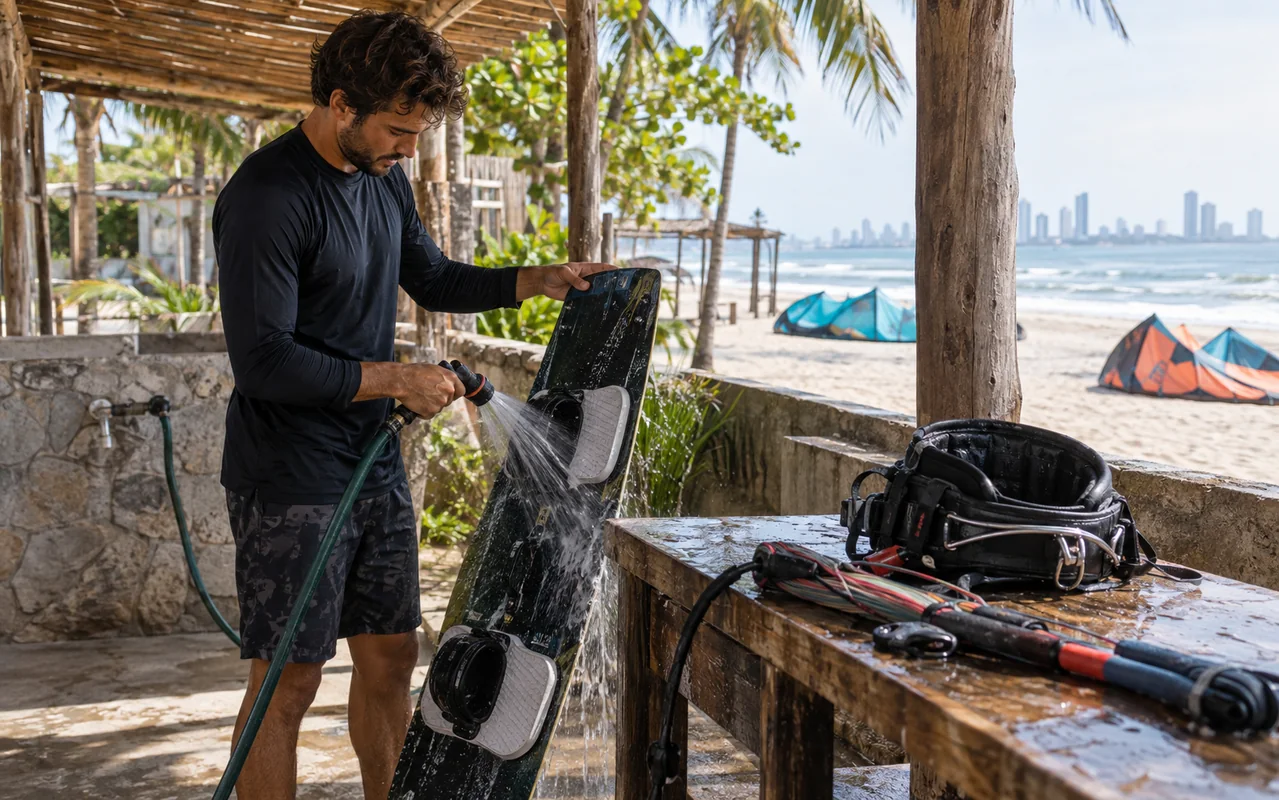
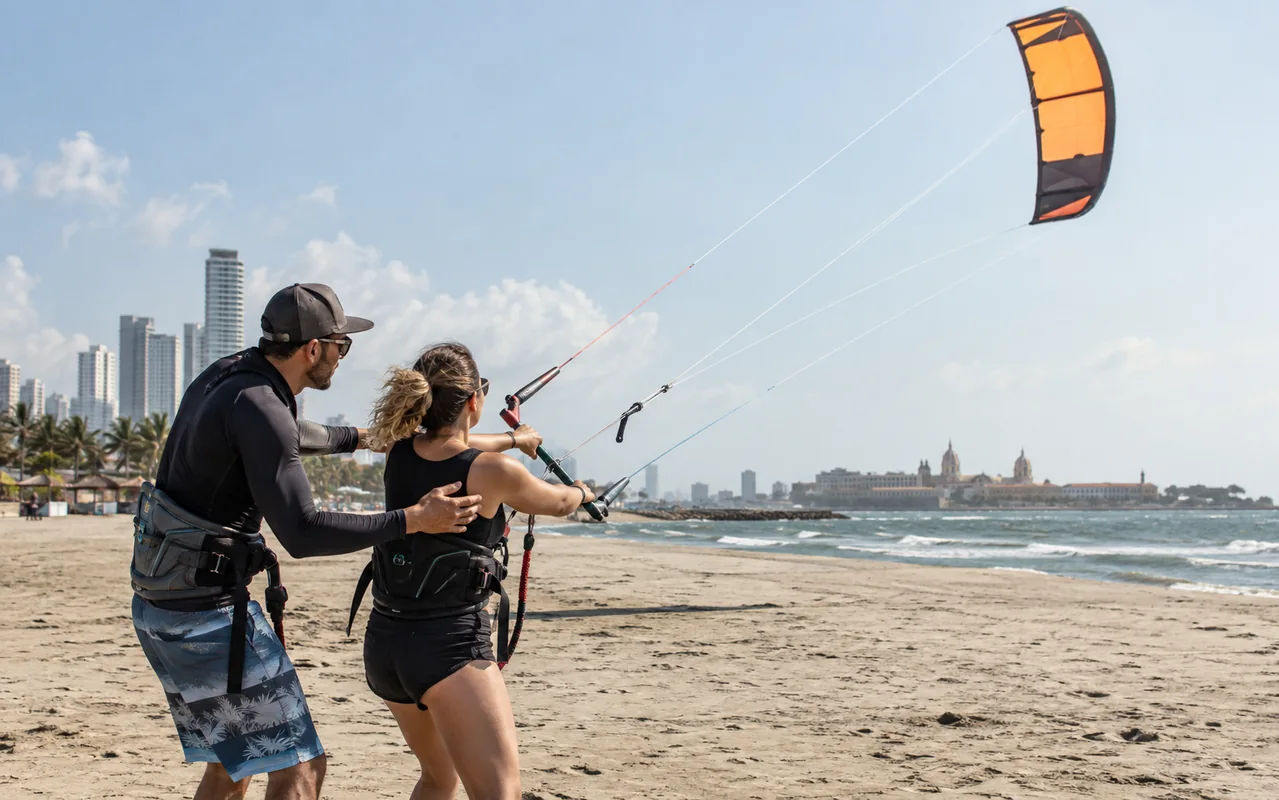
Check the assigned set and learn its release system with competent help and manufacturer instructions. Do not assume every bar operates alike. Visible line damage, an incompatible part or unusual operation calls for a stop and inspection. Agree on launch, landing and pause signals; do not treat an unclear gesture as permission.
Share the beach and plan the return
Keep paths clear and learn right-of-way rules before riding among others. Priority never removes the need to avoid a collision. Establish the return point and available support. Self-rescue is a practical skill to learn with an instructor; a written sequence cannot replace supervised training with your equipment.
Know when to finish
Arrange shade, water, sun protection and breaks before fatigue affects attention. Stop when conditions change or an instruction is unclear. Tell the responsible person you have returned and report pressure loss, impacts or unusual behaviour. This guide organises a review; it does not certify that a person, equipment set or sea state is suitable.
Official reference: IKO · Training videos · DIMAR · SIPSEM