Demonstrate current independence
Tell the provider when you last rode, on what equipment and in which conditions. A training record helps, but a local assessment may still be needed. Completing lessons and managing a session independently are different things. Disclose missing skills before equipment is assigned.
Define the support
Ask about launching, landing, monitoring, incident response, permitted area and return time. Rental does not automatically include rescue, transfers or teaching. If you need ongoing guidance, compare a supervised service or refresher. Establish the communication method before entering the water.
Inspect and document
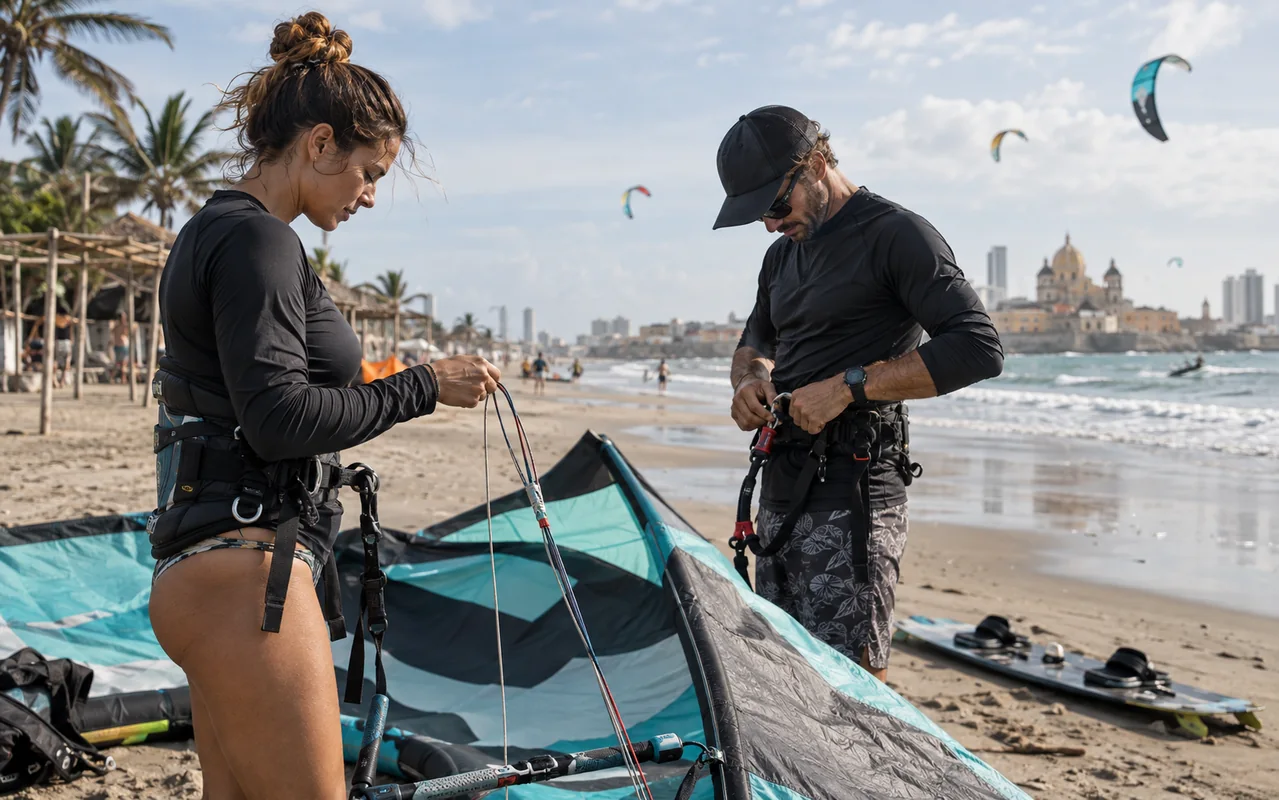
Review each item with the provider, learn unfamiliar controls and photograph pre-existing damage. Clarify deposit or guarantee, liability, return process and when charged time starts. Ask what happens if wind changes or appropriate equipment is unavailable. Do not accept an unfamiliar or unsuitable part simply because it is the only one offered.
Rent or bring your own
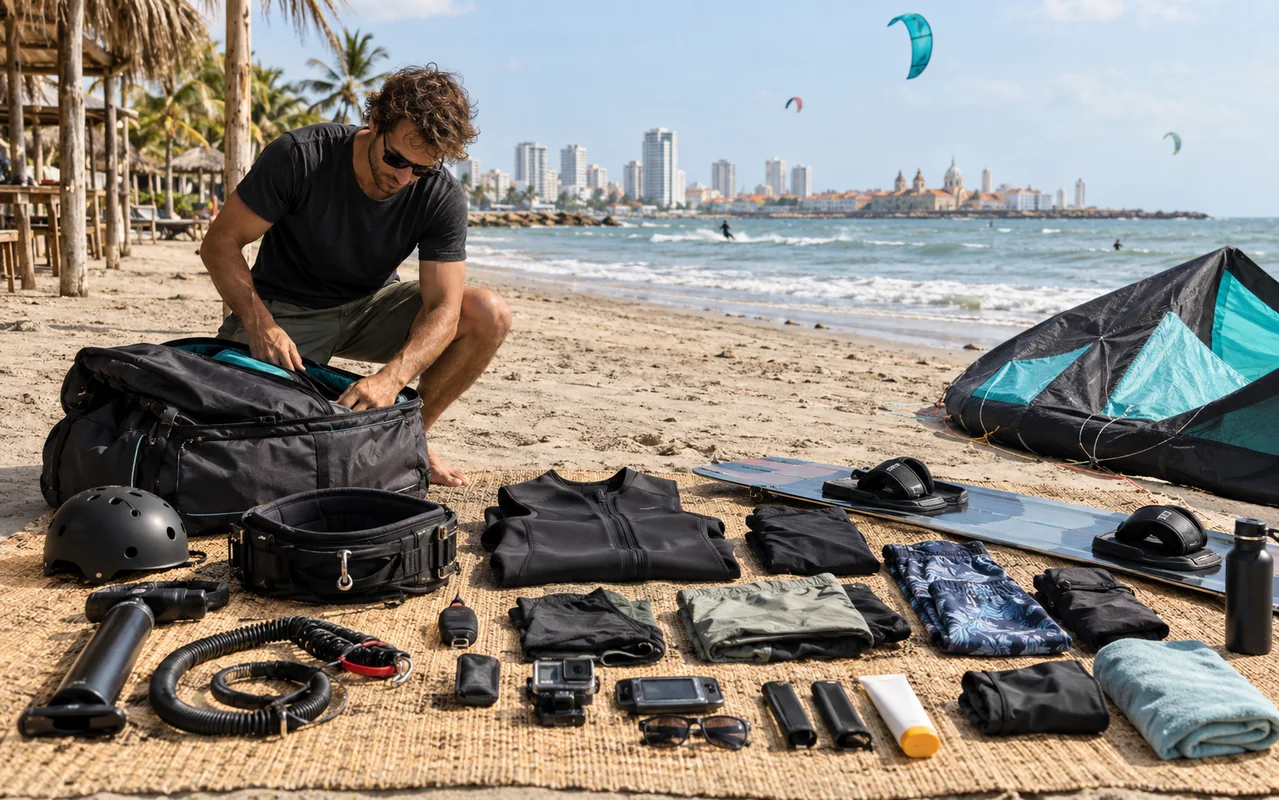
Compare baggage and transfer costs with trip length and local availability. Your own gear is familiar but requires transport, drying and storage. Renting reduces baggage but needs size and compatibility checks, particularly when mixing owned and rented parts. Return every item to the responsible person and request closure of the rental and guarantee where applicable.