Area is only one specification
Two kites with the same area can have different operating ranges and behaviour. Read the guidance for the actual model and year, including the compatible bar. A single table cannot reliably convert wind speed into the right size for every rider and board.
Gather the inputs
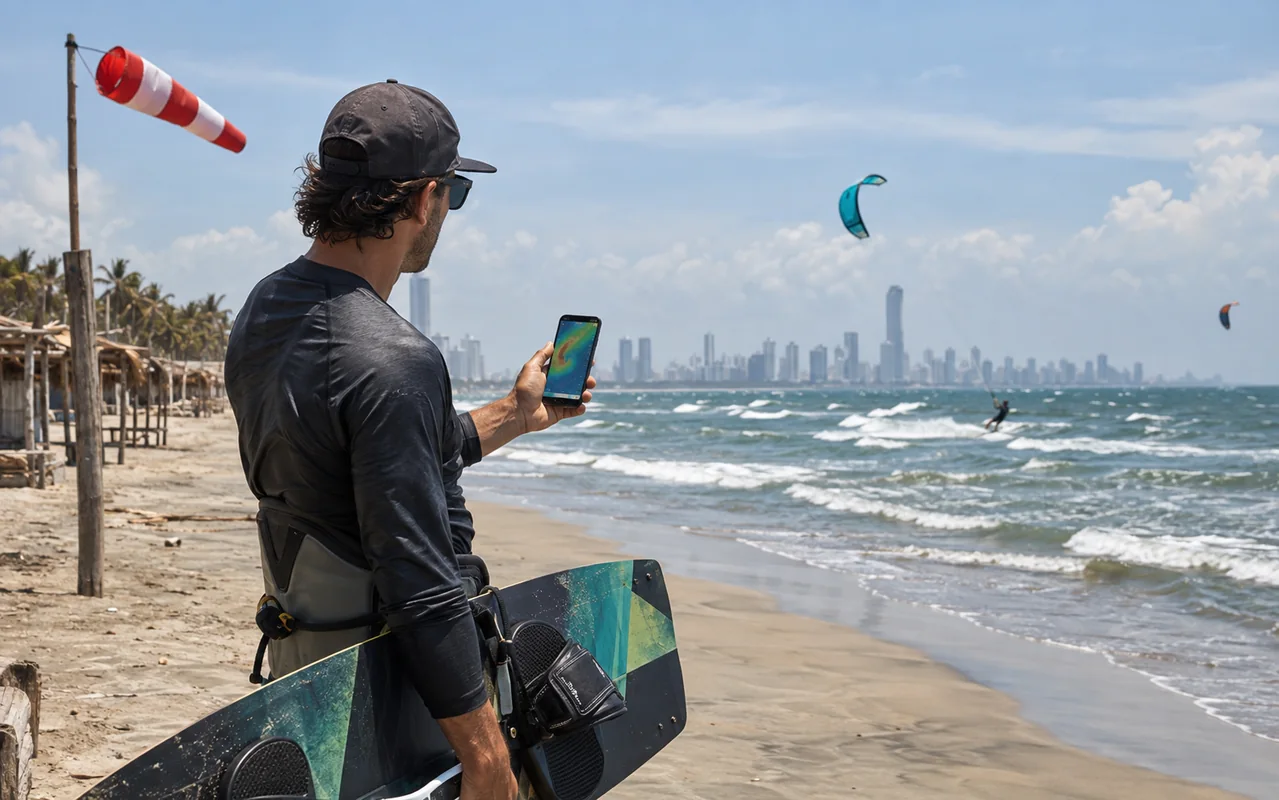
Record approximate rider weight, current ability, board type and size, kite model and manufacturer range. Add observed wind, gusts and direction relative to the shore. Do not copy another rider’s size when you do not know their equipment or ability. An unknown model or condition needs clarification first.
Consider variation and purpose
Identical average wind readings can hide different gust patterns. A measurement away from the beach may not describe the practice area. Do not treat a manufacturer’s upper range as a beginner training target. A choice made for a twin-tip also needs reassessment before a foil session or a different day.
Ask a complete question
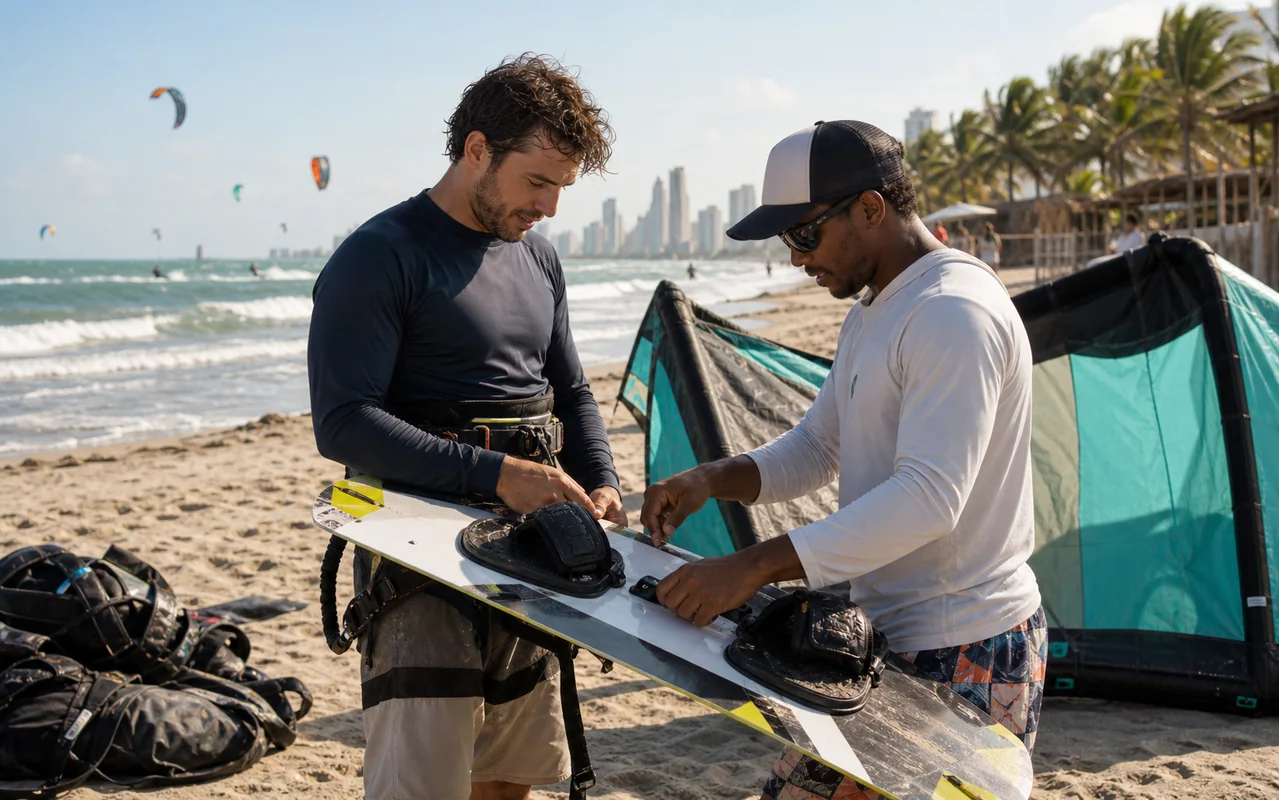
Instead of “Should I bring my twelve?”, provide weight, board, model, year and current skill level, with the forecast as context. Confirm the choice locally. For rental, ask what happens if suitable compatible equipment is unavailable. A useful response may be a different set or no session, rather than a size number.
Official reference: Duotone · Line length and kite handling · DIMAR · SIPSEM