How you receive power
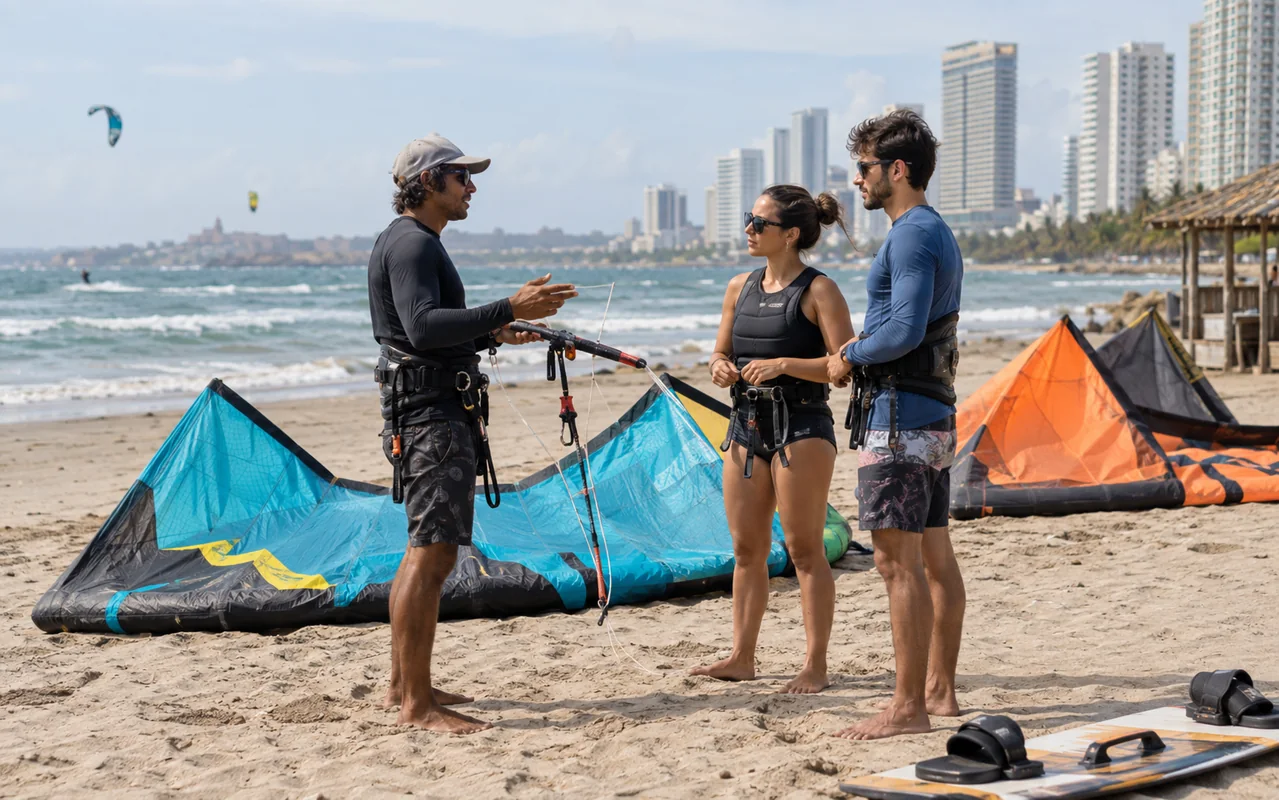
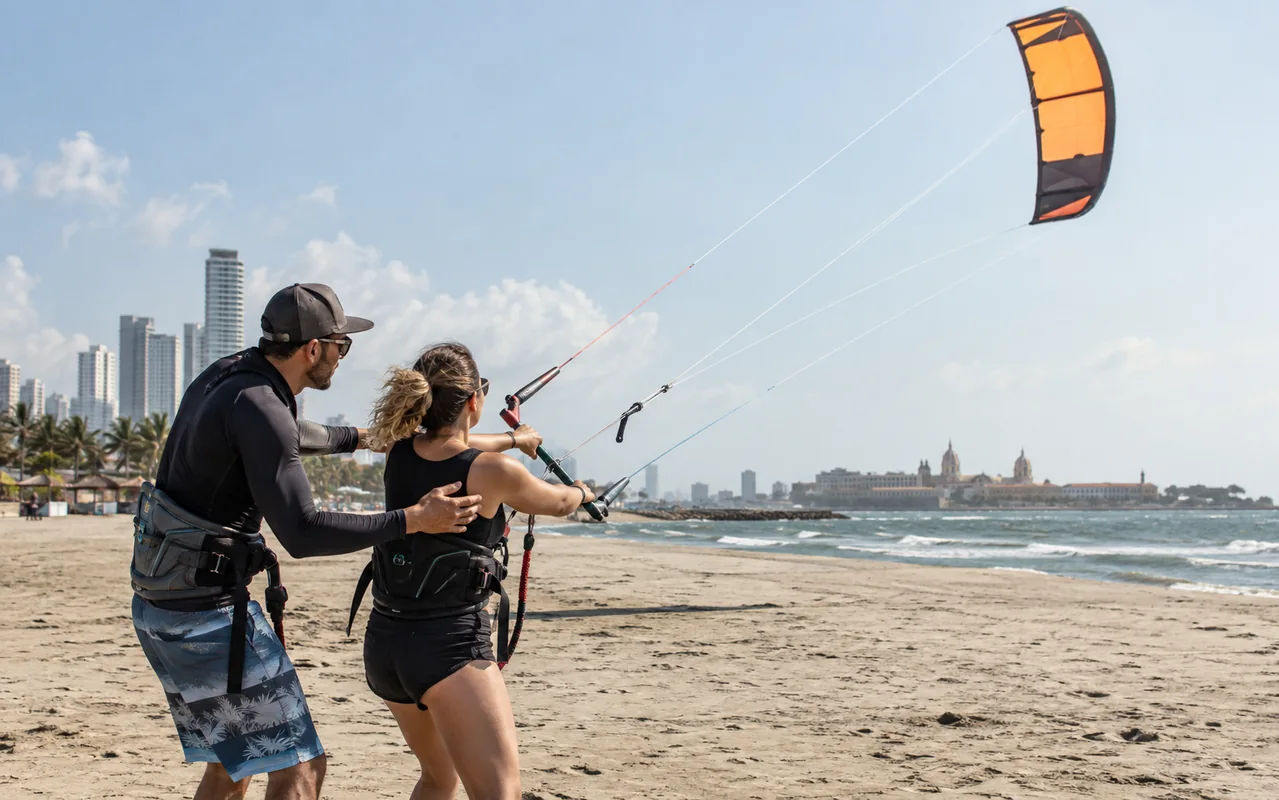
Kitesurfing uses a kite connected by lines to a control bar. A wing is held in the hands. This changes setup, coordination and space management; it does not make either activity risk-free. Skills from one discipline do not automatically establish independence in the other.
What board you will use
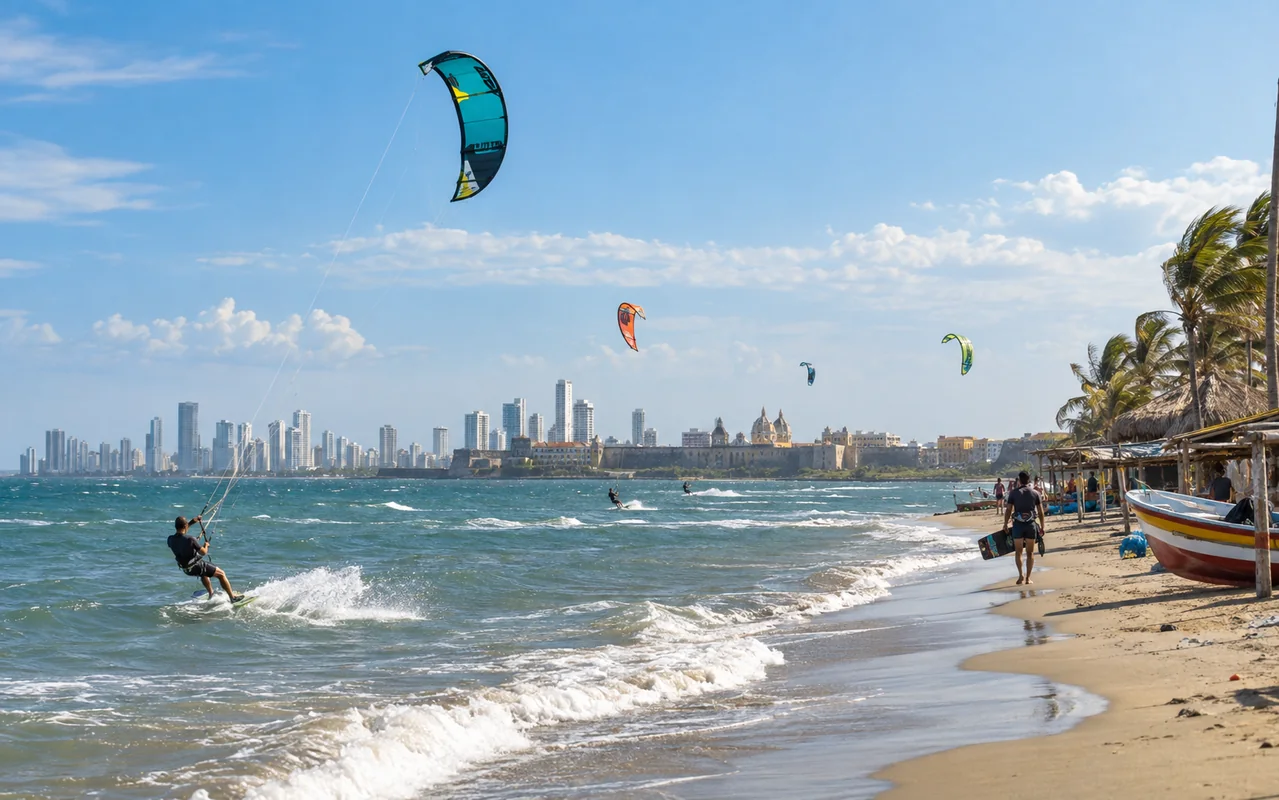
Introductory kitesurfing commonly uses a twin-tip. Wing foil combines a wing with a board and foil, although teaching may start with adapted exercises. Ask which equipment appears in your first session. A photograph of someone foiling does not necessarily describe your introductory lesson.
Skills and practice area
Kite control and board coordination develop together. Wing introduces different balance and handling tasks. Kite lines require rigging and operating space; foil use also requires attention to water depth. Surfing or sailing experience may help with some movements but does not replace learning the actual setup and procedures.
Choose a clear first objective
Explain what attracts you and compare instructor, equipment, duration and realistic first-session goals. Avoid choosing solely on a claim that one is always easier. Check suitable teaching opportunities during your dates. If you already practise one discipline, ask for an introduction to the new equipment rather than transferring safety procedures automatically.
Official reference: IKO · Courses and certifications · IKO · Training videos