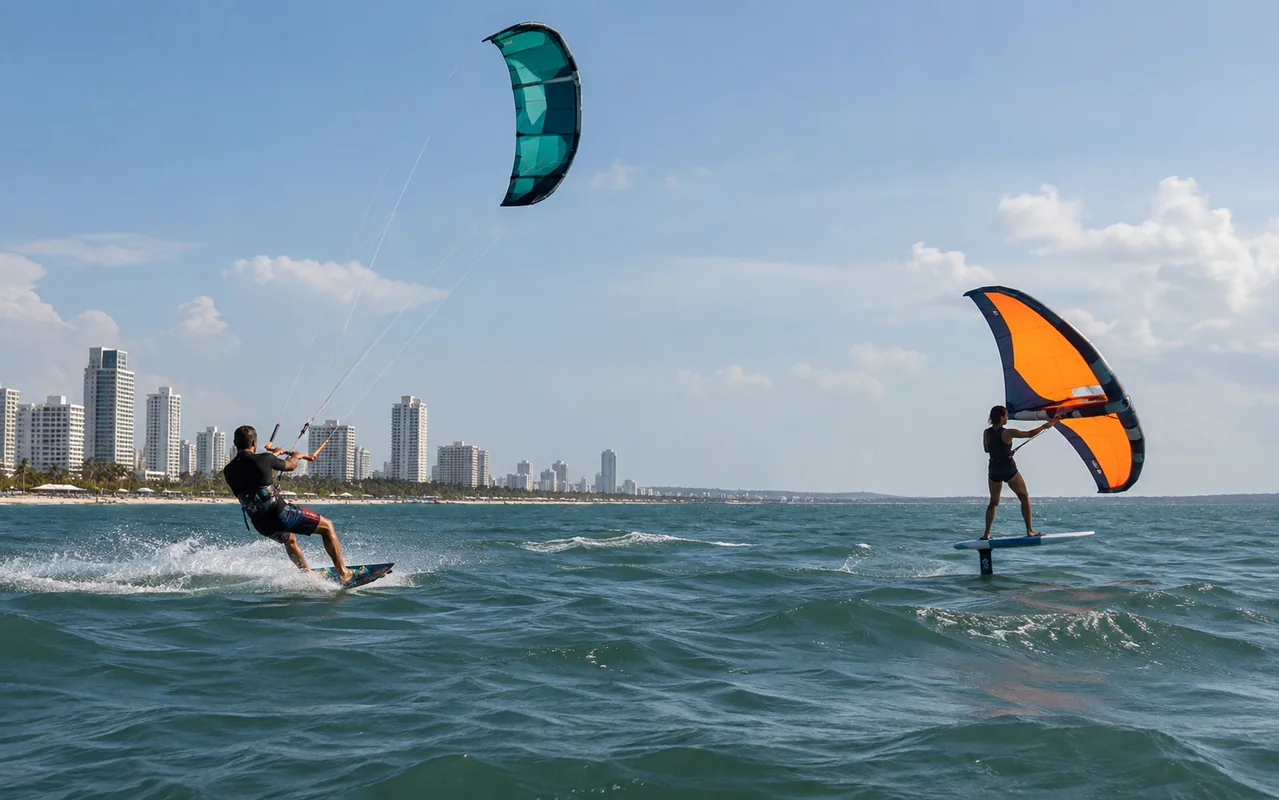
Twin-tip
A bidirectional board is designed for riding in both directions. It is a common reference in kite introductions, although the school selects the specific equipment. Using one does not mean balance, water starts and direction control develop automatically.
Directional board
A directional board has a defined orientation and relates to different disciplines and manoeuvres. Twin-tip experience provides context, but adaptation deserves specific teaching. Explain your current board and intended skill rather than simply requesting an advanced level.
Foil
This setup adds a mast and submerged surfaces that change the board’s relationship with the water. Depth, equipment and control require a particular assessment. Do not select a foil lesson solely because it looks like a variation of a familiar board.
Choose by the transition you want
Explain your starting discipline and intended destination, such as twin-tip kiting to kitefoil. The proposal can then address existing and new skills. Comparing only litres, centimetres or board prices leaves out the purpose of the lesson.