Share the trip, define two goals
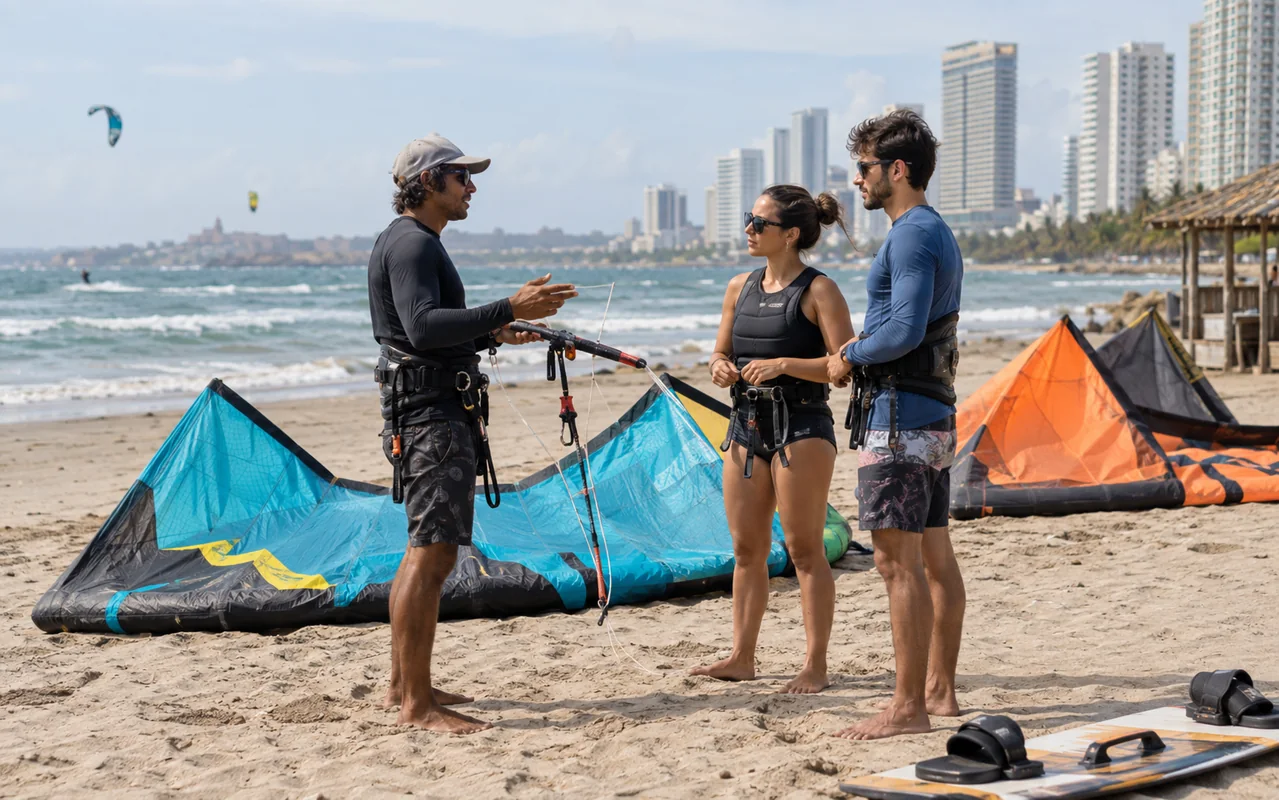
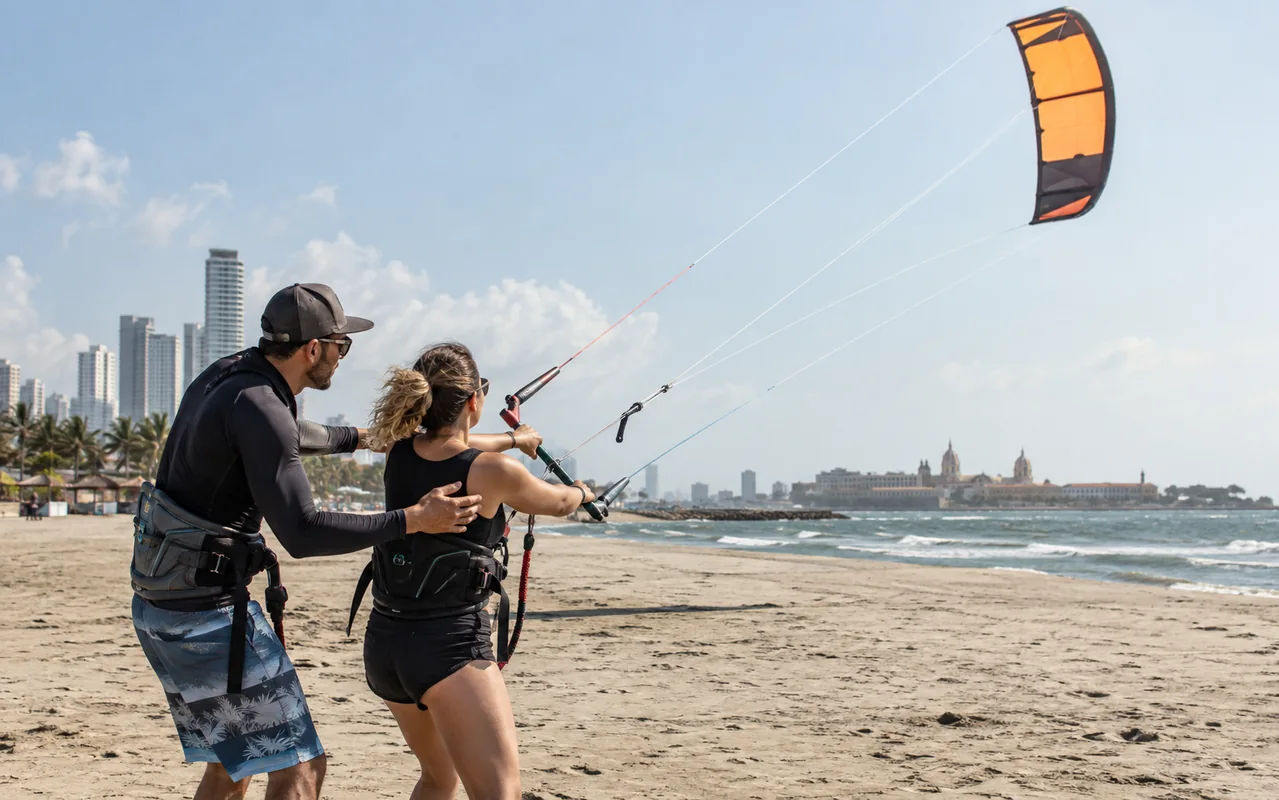
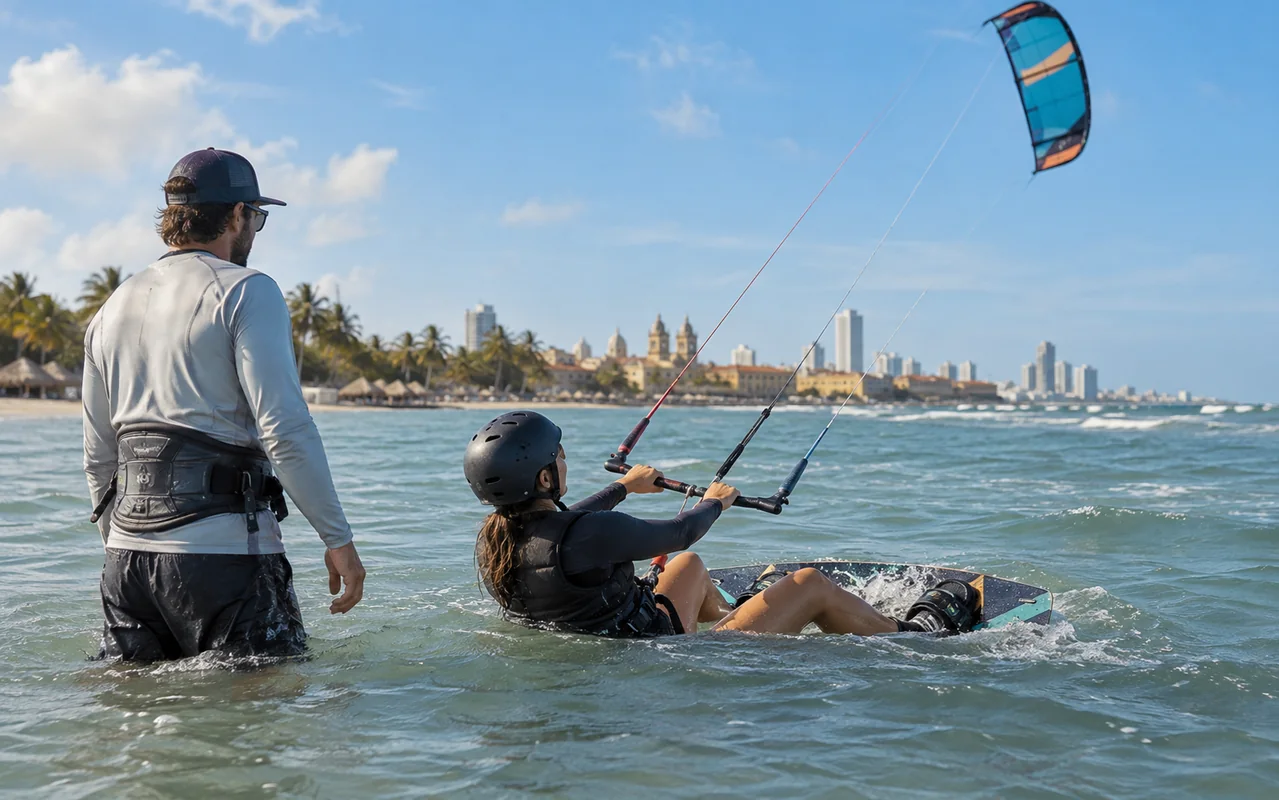
A beginner needs to understand the kite; someone already riding may be working on returning to their starting point. Describe both situations separately. Booking as a couple need not mean identical lesson content, and a joint offer only helps if its organisation meets both people’s needs.
Consider shared equipment carefully
Ask whether you will use the same kite, how turns work and who teaches each person. Differences in weight, experience and goals can affect appropriate equipment. Do not assume one configuration will suit both simply because you are available at the same time.
Agree on expectations
Before the session, each person can choose an observable achievement. Responding consistently to a signal is as valid for a beginner as consolidating a manoeuvre is for an experienced rider. Avoid measuring enjoyment solely by who stands on the board first.
Plan time outside the water
Coordinate transport, breaks and a meeting point if lessons take place separately. If one partner stops, check the effect on the booking before assuming their time can be transferred. A shared schedule with individual goals is clearer than revising the plan during every turn.